ICLEI East Asia Presents AI4US at the 10th MeTTA General Assembly and Forum
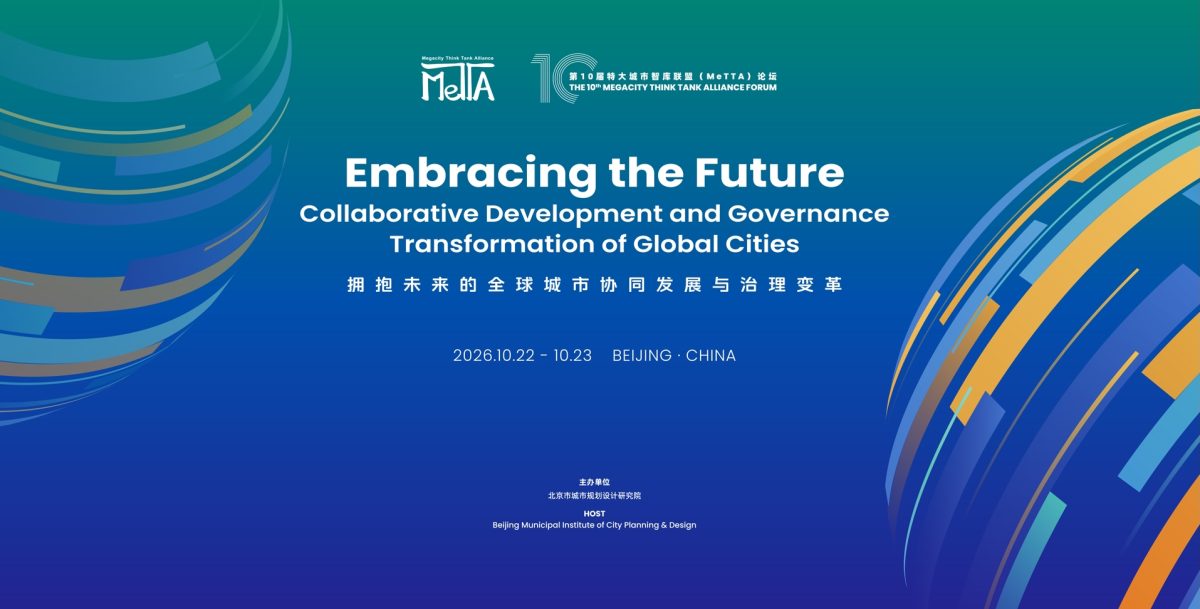
The 10th General Assembly and Forum of the Megacity Think Tank Alliance (MeTTA) was held in Beijing, China, on October 22–23, 2026, hosted by the Beijing Municipal Institute of City Planning and Design (BMICPD). Under the theme “Embracing the Future: Collaboration Development and Governance Transformation of Global Cities,” the forum brought together urban research institutions and experts to exchange perspectives on the challenges and opportunities facing major cities.
ICLEI East Asia Secretariat presented “Evolving Cities with AI: Building a Collaborative Platform for Urban Sustainability” and participated in a roundtable discussion on AI governance.
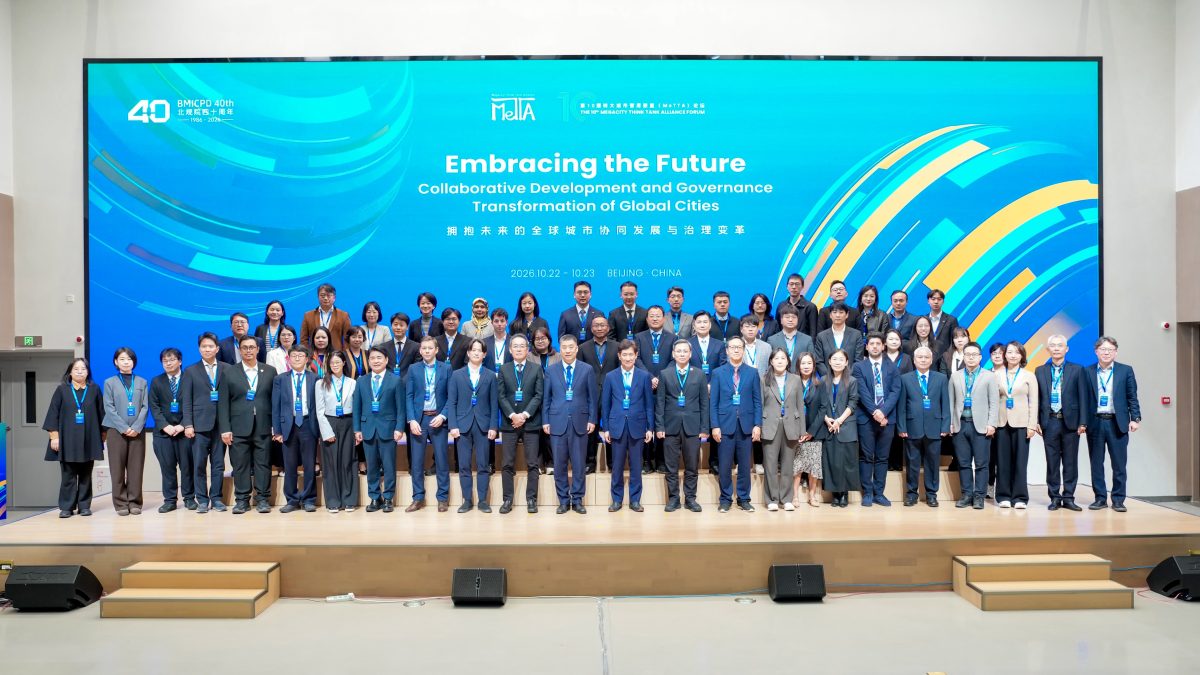
The 10th Megacity Think Tank Alliance (MeTTA) Forum group photo
Exploring AI for Climate Action and Sustainable Urban Development
Cities face increasingly complex challenges, including intensifying climate change, more frequent extreme weather events, and continued biodiversity loss. At the same time, advances in digital technologies and artificial intelligence (AI) are transforming urban planning, governance, and public services.
These developments offer new opportunities to strengthen climate resilience and advance sustainable urban development. However, cities must also ensure that AI applications respond to local needs and can be implemented effectively in different urban contexts.
Against this backdrop, ICLEI East Asia Secretariat launched AI for Urban Sustainability (AI4US) in 2026. The initiative aims to explore a platform for knowledge exchange and collaboration among cities, as well as between cities, businesses, and research institutions. Building on ICLEI’s existing experience with AI, AI4US seeks to connect urban challenges with technical expertise and potential partners, while promoting the fair and safe application of AI in climate action and sustainable urban development.
During the presentation, Yeonah Ku, Program Officer at ICLEI East Asia, highlighted the direction of AI4US:
“Building on ICLEI’s existing experience with AI, AI4US explores how cities, technology providers, researchers, and other partners can collaborate across borders to connect urban needs with international cooperation.”
The presentation emphasized the importance of starting with the needs and priorities of local governments rather than assuming that solutions developed elsewhere can be directly replicated. During the roundtable discussion, ICLEI East Asia also highlighted the importance of understanding member cities’ challenges when developing collaborative initiatives.
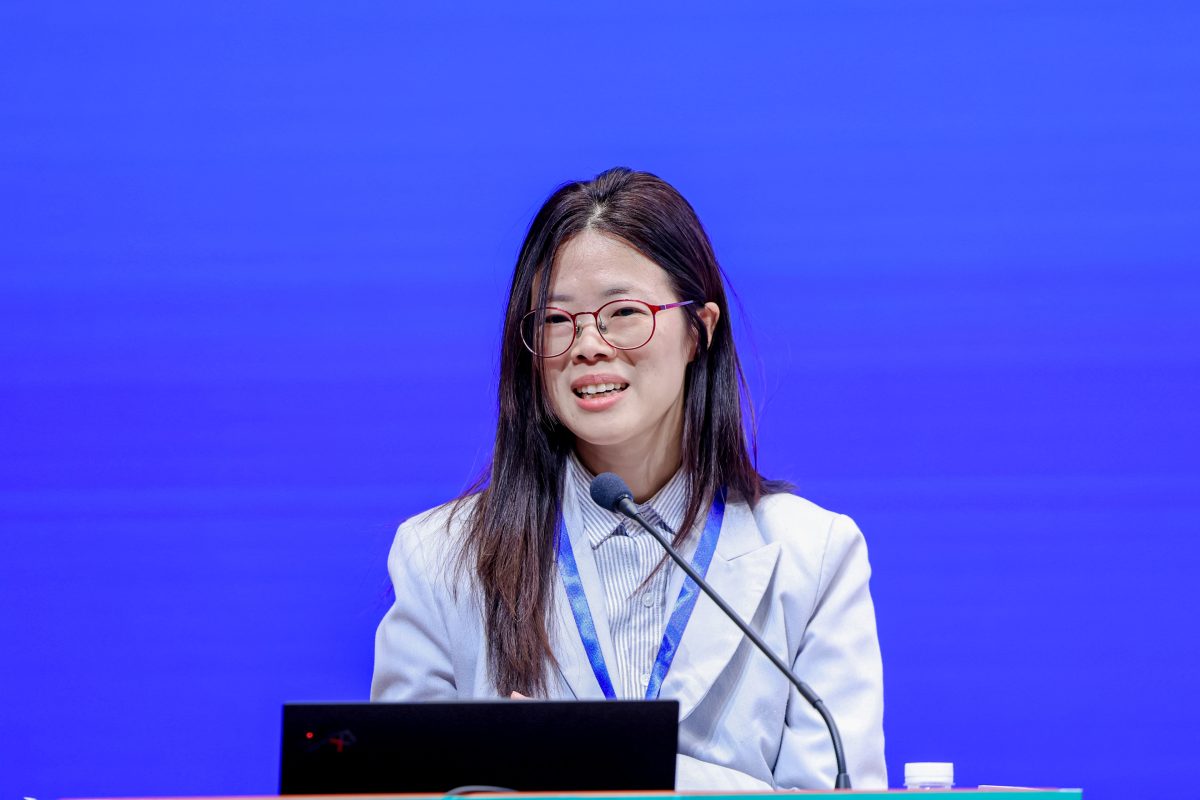
Yeonah Ku, Program Officer at ICLEI East Asia, presented the AI4US project
Sharing Urban Experiences and Approaches
The forum featured presentations on climate-responsive urban development, AI applications, and urban regeneration, providing opportunities for participating institutions to share practical experiences and explore approaches to common urban challenges.
Examples from Beijing and Shenzhen highlighted how urban planning can support climate action. The Shenzhen Urban Planning and Design Institute presented its experience in reducing carbon emissions in high-density megacities, while the Beijing Municipal Institute of City Planning and Design shared its work on integrating renewable energy into territorial spatial planning. These cases demonstrated how planning strategies and policy tools can help cities respond to climate challenges.
Discussions on AI explored its potential to support urban planning, governance, and public services, alongside the need for effective governance and collaboration. ICLEI East Asia introduced AI4US as a platform for connecting cities with technology providers, researchers, and other partners to help align technological solutions with urban needs.
The Seoul Institute contributed a people-centered perspective through its presentation, “Beyond Walkability: Planning Seoul’s Waterfront, Healthy, and Care Neighborhoods.” The presentation highlighted the importance of considering everyday life, health, and care in urban planning. The Beijing Municipal Institute of City Planning and Design also shared its experience in urban regeneration through the renewal of streets in Beijing’s old city, illustrating how local planning approaches can respond to the needs of established urban neighborhoods.
Together, these examples reflected the range of approaches cities are taking to address climate challenges, explore emerging technologies, and create more livable urban environments.
Strengthening Collaboration through MeTTA
The forum brought together representatives from 16 of MeTTA’s 17 member organizations, along with three observer organizations. The General Assembly revised the alliance’s membership structure, consolidating its previous categories of Active Members and Associate Members into Members and Observers. Under the revised structure, ICLEI was recognized as a Member. ICLEI also introduced the Urban Planning & Design Institute of Shenzhen (UPDIS), which joined MeTTA as a member.
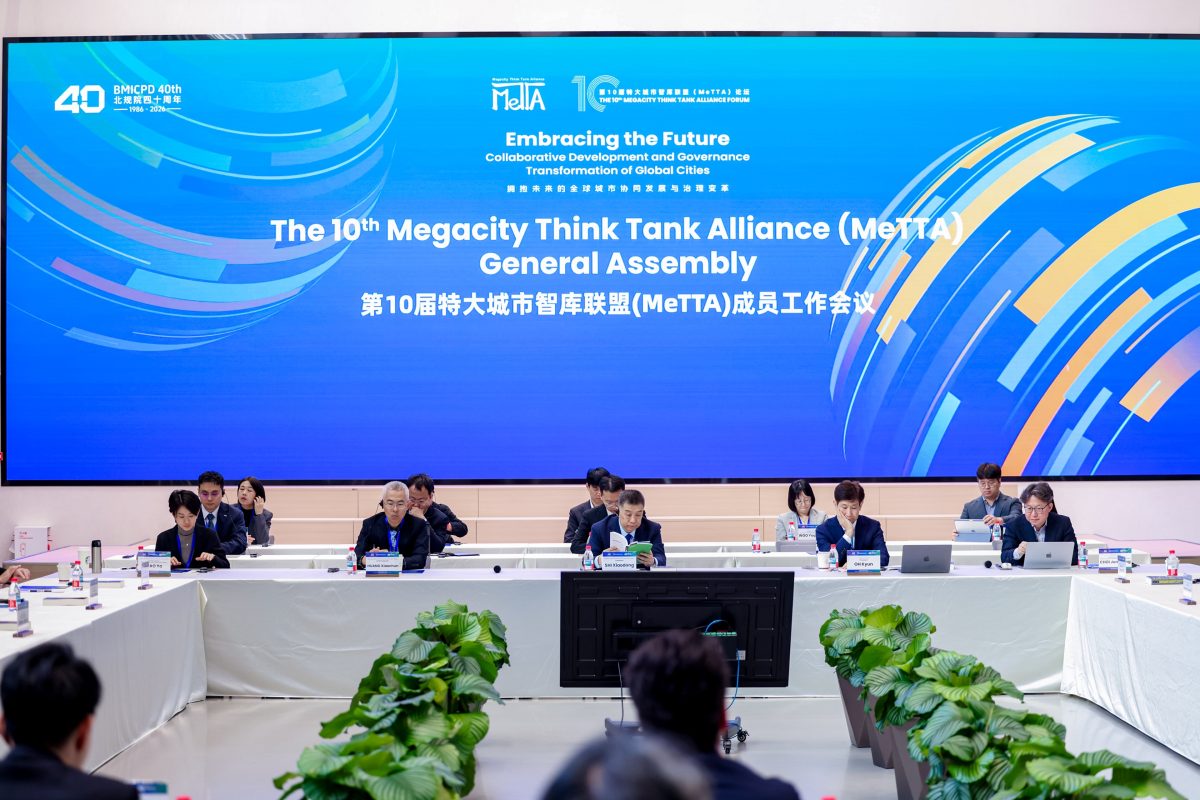
The 10th Megacity Think Tank Alliance (MeTTA) General Assembly
The forum released the MeTTA Beijing Initiative, which sets out six priorities: collaborative research; climate resilience and a just transition; people-centered cities; ensuring that data, digital technologies, and AI serve the public interest; bridging science and policymaking; and strengthening the alliance. Together, these priorities underscore the value of cooperation across institutions and cities in responding to complex urban challenges.
The 11th MeTTA General Assembly and Forum is scheduled to take place in Incheon, Republic of Korea, in 2027, hosted by the Incheon Institute. Through its participation in MeTTA, ICLEI East Asia continues to support knowledge exchange among urban research institutions and explore opportunities to connect cities’ needs with international expertise and partnerships.